What If a Simple Calendar Could Keep Your Aging Parents Closer—And Safer—Every Day?
Imagine worrying less about your mom forgetting her doctor’s appointment or your dad missing a family birthday. Now picture a tool you already use—your calendar—quietly helping your elderly parents stay on track, feel connected, and live more independently. It’s not magic. It’s shared calendars, working gently in the background, turning small moments into meaningful care. You don’t need a fancy app or a steep learning curve. Just a few taps on a phone or tablet, and suddenly, you’re not guessing if your parents are okay—you’re seeing it, week by week, in real time. This isn’t about replacing phone calls or visits. It’s about making those moments richer, because you’re not starting every conversation with, "Did you go to the cardiologist?" Instead, you can say, "How did it go?" And that makes all the difference.
The Quiet Crisis No One Talks About: Staying Connected While Letting Go
There’s a moment most of us don’t see coming—the quiet shift when our parents, once the ones reminding us to eat dinner or take an umbrella, start needing those reminders themselves. It’s not dramatic. There’s no warning bell. Just a missed call on Mother’s Day. A voicemail from the pharmacy saying a prescription wasn’t picked up. A neighbor mentioning they haven’t seen Dad outside in days. These small things pile up, and suddenly, you’re caught between two fears: the fear of not doing enough, and the fear of doing too much.
I remember when my sister called me after Mom forgot her dermatologist appointment—again. "She said she wrote it down," my sister sighed. "But the paper’s gone. And now she’s embarrassed, and I feel guilty for bringing it up." We weren’t mad at her. We were mad at the helplessness. We loved her, but we didn’t know how to show up in a way that felt supportive, not suffocating. We didn’t want to become the "nagging kids," calling every day asking if she’d eaten or taken her pills. But we also couldn’t just do nothing.
This is the emotional tug-of-war so many of us face. We want our parents to live independently—truly live, not just survive. But we also want peace of mind. The truth is, aging doesn’t come with a manual, and neither does caregiving. We’re all improvising. And often, we wait until something goes wrong before we act. But what if we didn’t have to wait? What if there was a way to stay connected, to offer quiet support, without hovering or invading privacy? That’s where something as simple as a shared digital calendar stepped in—not as a fix, but as a gentle bridge.
From Scheduling to Caring: How a Shared Calendar Becomes a Lifeline
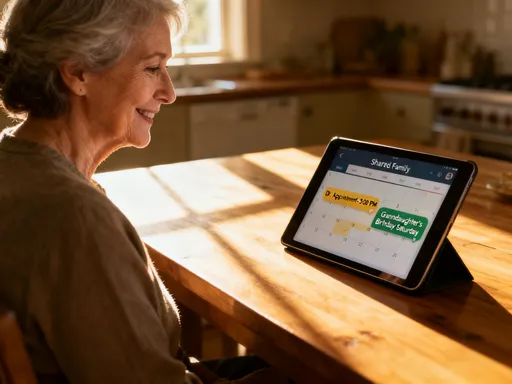
At first, the idea of sharing a calendar with my mom felt a little strange. It seemed too clinical, too techy. Like something for busy executives, not for a woman who still writes grocery lists in a spiral notebook. But then we tried it—just for her weekly doctor visits and the family Zoom calls. And slowly, something shifted. She started adding things herself: her book club, the gardening class at the community center, even her hair appointments. Suddenly, I could see her life—not just the medical stuff, but the joyful parts too. And that changed everything.
Here’s how it works in real life: every Sunday night, I glance at our shared calendar. I see Mom’s blood pressure check on Monday morning, her Tuesday coffee with her neighbor, the family call scheduled for Wednesday at 4 p.m. I don’t have to call and ask, "What’s your week look like?" I already know. And if something’s missing—a check-up not scheduled, a quiet stretch with no plans—I can gently bring it up: "Hey, it looks like you’re due for your eye exam. Want me to help you book it?" No interrogation. Just care, wrapped in a simple question.
For my dad, we added medication reminders as recurring events—"Take heart pills—morning and night"—with a soft chime. He doesn’t love the sound, but he admits it helps. And when he marks it as done? I see a little green checkmark. It’s a tiny thing, but it gives me peace. I’m not guessing. I’m not imagining the worst. I’m seeing the rhythm of his days, and it keeps me from spiraling into worry. The calendar doesn’t replace conversation. But it makes our conversations better. Instead of starting with anxiety, we start with connection.
Bridging the Tech Gap: Making It Work for Parents Who “Don’t Get” Smartphones
Let’s be honest—many of our parents didn’t grow up with smartphones. To them, a phone is for calling, maybe texting if they’re feeling adventurous. The idea of calendars, apps, syncing—well, it can feel overwhelming, even insulting. "I’m not helpless," my mom said the first time I suggested it. And she’s right. She’s not. So we didn’t start with instructions or a lecture. We started with coffee.
One Saturday morning, I brought my laptop over, made her a cup of tea, and said, "Let’s put your book club on the calendar together." That’s it. No pressure. No tech talk. We opened the app, typed in the date, added the location, and set a reminder for an hour before. When she saw the notification pop up on her phone later that week, she smiled. "Well, I’ll be. It remembered." That small win built confidence. The next week, we added her doctor’s visit. Then her granddaughter’s piano recital. Each time, it was a shared moment, not a lesson.
The key? Keep it simple and personal. Use large fonts so it’s easy to read. Add voice notes instead of text—she can tap a button and hear my voice saying, "Mom, don’t forget your umbrella today, it’s supposed to rain." Pair calendar use with routines she already loves: after morning coffee, check the day’s plans. Before bed, review tomorrow. And always, always let her be in control. She decides what to add, what to share, who sees what. It’s not about teaching her to use tech. It’s about showing her how tech can serve her life—on her terms.
Beyond Dates: Turning a Calendar into a Memory Keeper
A calendar doesn’t have to be just about the future. It can hold the past, too. One of the most beautiful things we’ve done is start marking special dates—not just birthdays, but little memories. The day she planted her rose garden. The anniversary of her first trip to the coast with Dad. The date her favorite bakery opened downtown. When those days come around, the calendar reminds us—and we call, not to check in, but to celebrate.
Sometimes, I add a photo to the event—a picture from that beach trip, a snapshot of her holding her first grandchild. When she opens the event, she sees it. And more than once, she’s called me back, her voice softer: "I was just looking at that picture. I’d forgotten how happy we all looked." For someone beginning to forget, these moments are anchors. They say, "You are remembered. You matter."
We also started scheduling "remember when" calls—just 15 minutes, once a month, where we look back at old photos together over video. It’s not therapy. It’s love, dressed up as a calendar event. And for my dad, who’s starting to repeat stories, it’s been a gift. Instead of correcting him, I let him tell it again, and I listen like it’s the first time. Because for him, in that moment, it is. The calendar doesn’t stop time. But it helps us hold onto what matters, one small memory at a time.
Family Harmony: How One Calendar Aligns Siblings, Time Zones, and Responsibilities
When you’re not the only child, caregiving can get messy. My brother lives three time zones away, and for years, we were always out of sync. "Did you call Mom?" "I thought you were checking on the prescription." "Wait, when is her appointment again?" The texts piled up, the guilt grew, and no one felt fully in the loop. We loved her just as much, but we were failing each other—and her—by not coordinating.
The shared calendar changed that. Now, we all see the same thing. When Mom has a test, one of us marks it as "covered"—meaning we’ll call her before and after. When she needs a ride, we add it to the calendar with a note: "John can pick up at 9:30." No more guessing. No more double-checking. And no more passive-aggressive texts. The calendar became our family’s quiet peacekeeper.
It’s also helped us share the load more fairly. My sister takes the weekly grocery run. I handle the tech stuff. My brother schedules the long Sunday calls. The calendar shows who’s doing what, and it’s visible to all of us. When someone’s been carrying more, the rest of us notice—and step in. It’s not about keeping score. It’s about staying in rhythm. And for my mom? She sees all of us showing up, not just me. That makes her feel loved in a deeper way. She’s not a burden. She’s the center of a circle that’s still strong.
Privacy, Trust, and Boundaries: Keeping It Helpful, Not Intrusive
I’ll admit, I had concerns at first. Was this crossing a line? Was I turning into the kind of daughter who monitors her parents like a security system? And honestly, my mom felt that too. "Am I being watched?" she asked once. That question hit me hard. I realized that trust isn’t just about doing the right thing—it’s about making sure it feels right, too.
So we set boundaries—together. She decides what goes on the shared calendar. Her bridge games? Shared. Her weekly therapy session? Private. I don’t add anything without asking. Reminders are gentle: a soft chime, not a blaring alarm. And she can turn off notifications anytime. This isn’t surveillance. It’s support. The difference is respect.
We also agreed on how we use it. I don’t check it obsessively. I look once a day, maybe twice. And I never comment on her choices—"Why are you going out in the rain?"—unless she’s in real danger. It’s her life. The calendar is just there to help her live it fully, not to control it. When she canceled a doctor’s visit, I didn’t panic. I called and said, "I saw you rescheduled. Everything okay?" She appreciated that I noticed—but didn’t assume. That balance—care without control—is everything.
A Smarter, Softer Way to Care: Building a Future Where Technology Feels Human
Here’s what I’ve learned: technology doesn’t have to be flashy to be powerful. It doesn’t need to track heartbeats or analyze sleep to make a difference. Sometimes, the most meaningful tech is the one that stays in the background, doing quiet work. The shared calendar hasn’t solved every challenge of aging. But it’s given us something rare: presence without pressure, care without chaos, connection without constant checking.
It’s not about replacing the old ways. We still send cards. We still visit. We still argue over who makes the best apple pie. But now, we’re more in sync. We’re not operating in the dark. And my parents? They’re not alone in their routines. They’re seen. They’re remembered. They’re loved—every day, in small, consistent ways.
What started as a tool for scheduling has become a language of love. A birthday reminder isn’t just a notification—it’s a promise. A medication alert isn’t just a beep—it’s a hand reaching out. And a shared event isn’t just a dot on a screen—it’s a moment of togetherness, even when we’re miles apart.
If you’re worrying about your parents, wondering how to help without overstepping, I’ll say this: start small. Share a calendar. Add one event. Make it about joy, not just duty. Let it grow naturally. And most of all, let it be guided by love, not fear. Because the goal isn’t to prevent every mistake. It’s to make sure they never feel alone in making it. In the end, that’s what really matters. You’re not just keeping them safe. You’re keeping them close. And that? That’s the kind of tech magic we can all believe in.